
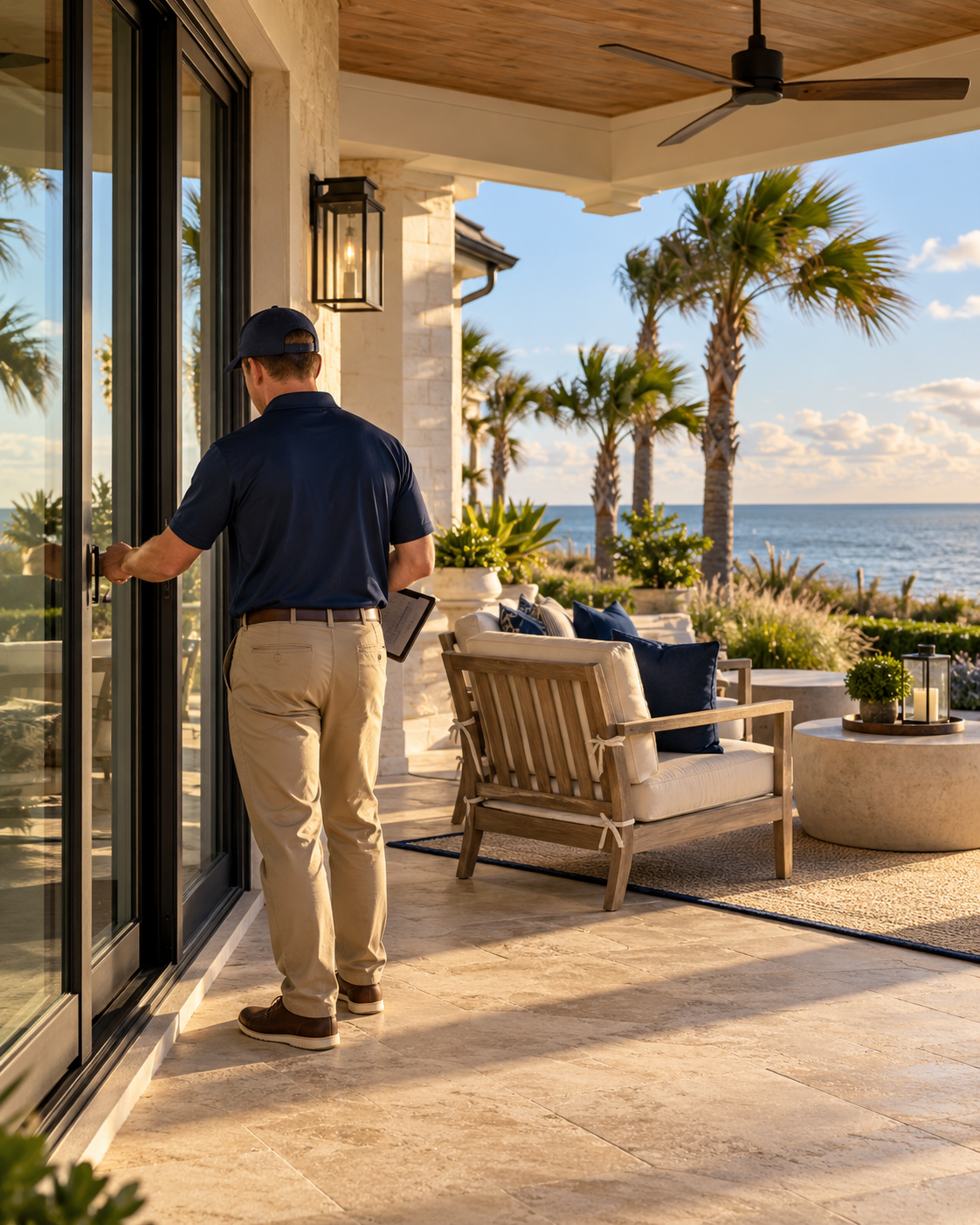
The first cold front does more than change the forecast. For a Texas coastal home that has been sitting closed, it creates a useful moment to check what wind moved, what the season changed and whether the home is still set for the owner’s next absence or arrival.
The Season Changed While the House Was Empty
A second home can move from warm, humid conditions to cooler, windy weather without an owner there to make the usual adjustments. Outdoor pieces may shift. A slider that seemed settled may deserve another look. The thermostat may still be following a summer schedule even though the home’s seasonal plan has changed.
A change-of-season visit gives those details a defined place in the care plan. It is not an emergency inspection. It is a documented visual check before and after the first meaningful weather change, completed only when travel and access are safe.
Secure What Wind Can Move
Before gusty conditions arrive, the agreed route can include lightweight items in accessible exterior areas. The purpose is to reduce avoidable movement and leave a clear record of what was handled—not to promise that outdoor belongings cannot be damaged or displaced.
- Move or secure approved patio chairs and small tables
- Place lightweight planters and décor in the owner-approved location
- Confirm grills and covers are positioned according to the written plan
- Check that trash and recycling containers are stored or secured as authorized
- Photograph the completed exterior areas before leaving
Walk the Exterior After Conditions Settle
Once conditions and local access are reasonably safe, a follow-up walk can compare visible exterior areas with the prior report. Overview photographs provide context; closer photographs document a shifted item, damaged screen or other visible change without turning an observation into a diagnosis.
The route should remain at safe, accessible ground level. Roofs, elevated surfaces, electrical equipment and unstable areas require the appropriate qualified professional.
- Observe the roofline, soffits and exterior finishes from accessible ground-level viewpoints
- Check visible fences, gates, screens and outdoor furnishings included in the route
- Confirm accessible exterior doors and sliders appear closed and latched as authorized
- Note standing water, debris or visible staining without speculating about the cause
- Record areas that could not be safely observed
Confirm the Home’s Seasonal HVAC Plan
A cooler day can prompt a quick thermostat change, but vacancy settings should not be guessed. Equipment types, humidity controls, smart schedules and manufacturer guidance differ from one home to another.
The property-care visit can confirm the owner-authorized operating mode, record the displayed temperature and relative humidity, and note visible alerts or unexpected settings. Fall maintenance, heating performance, drainage concerns and equipment programming belong to a qualified HVAC professional familiar with the system.
Check the Interior Transition Points
Doors, windows and large coastal sliders are natural places to look after windy weather. The visit can also include ceilings and walls near exterior openings, accessible floors, and the areas around approved plumbing or HVAC observation points.
The report should distinguish facts from conclusions: what was visible, what appeared different from the last documented visit and what needs professional evaluation. An unusual odor, visible condensation, stain or damp area should be photographed and communicated rather than diagnosed on site.
Send a Useful Change-of-Season Report
A useful owner update is more than a gallery of unlabeled images. It identifies the date and time, the route completed, the settings displayed, the items secured, any access limitation and the next decision the owner may need to make.
- Exterior and interior overview photographs
- Detail photographs tied to a named room or elevation
- Displayed thermostat and humidity information when included
- A list of tasks completed within the authorized scope
- A clear note for any issue that needs owner direction or a qualified trade
A Fall Visit Has Clear Limits
A property-care visit is a visual observation and communication service. It does not certify the roof, diagnose HVAC performance, test for concealed moisture or mold, provide security patrol, or guarantee against future loss.
Its value is practical: a consistent local route, careful documentation and a clear handoff when a specialist is needed. For an owner who is hours away, the first cold front is a sensible reminder to confirm that the home’s seasonal plan is actually in place.
Frequently Asked Questions
When should a first-cold-front visit happen?
When practical, approved exterior preparation can occur before windy conditions and a visual follow-up can occur after conditions and local access are reasonably safe. Timing depends on the forecast, travel, access and the written care plan.
Can the visit include securing patio furniture?
Yes, when the specific items, approved storage locations and timing are included in the service scope. Heavy, fragile or hazardous items may require a separate provider or additional planning.
Will Coastal Property Care turn on the heat?
Only when the owner has provided written authorization and the setting is part of the agreed seasonal plan. Equipment diagnosis, programming and maintenance remain the responsibility of a qualified HVAC professional.
Does the visit include a roof inspection?
No. The care provider may document the visible roofline from safe, accessible ground-level viewpoints, but roofing inspection and repair require a qualified professional.
What happens if a visible concern is found?
The owner receives photographs and a concise description of what was observed. Coastal Property Care can follow the authorized communication and vendor-access process, while the owner or designated decision-maker approves the professional next step.