
Turning the air conditioning off may seem like an easy way to reduce energy use in an empty home. Along the Texas coast, however, the decision also removes one of the home’s primary tools for cooling and moisture control.
This does not mean every home needs the same thermostat setting. Equipment, construction, insulation, ventilation, furnishings and time away all matter. The safest approach is a property-specific plan established with the homeowner’s HVAC professional, then supported by consistent observations while the home is unoccupied.
Cooling and moisture control are connected
When a properly operating air-conditioning system cools indoor air, moisture can condense at the cooling coil and drain away. If the system is shut off, that normal cooling cycle is unavailable. In a closed coastal residence, outdoor humidity, air leakage, weather and interior moisture sources can still influence conditions inside.
A warm house is not automatically a damaged house, and a single humidity reading does not diagnose a problem. What matters is whether the home’s readings and visible conditions remain within the plan recommended for that property.
Use an empty-home setting—not a guess
An occupied comfort setting may be unnecessary while no one is staying at the house. Shutting the equipment off entirely can create a different risk. Ask the HVAC professional who knows the system to recommend the appropriate temperature, humidity target and operating mode for periods of vacancy.
The written plan should account for:
- The type, age and condition of the HVAC equipment
- Whether the system includes dedicated dehumidification
- The home’s construction, size and number of zones
- Manufacturer instructions and warranty requirements
- Insurance or association requirements
- The season and expected length of vacancy
- Prior moisture, drainage or HVAC concerns
Confirm that the setting stayed where it belonged
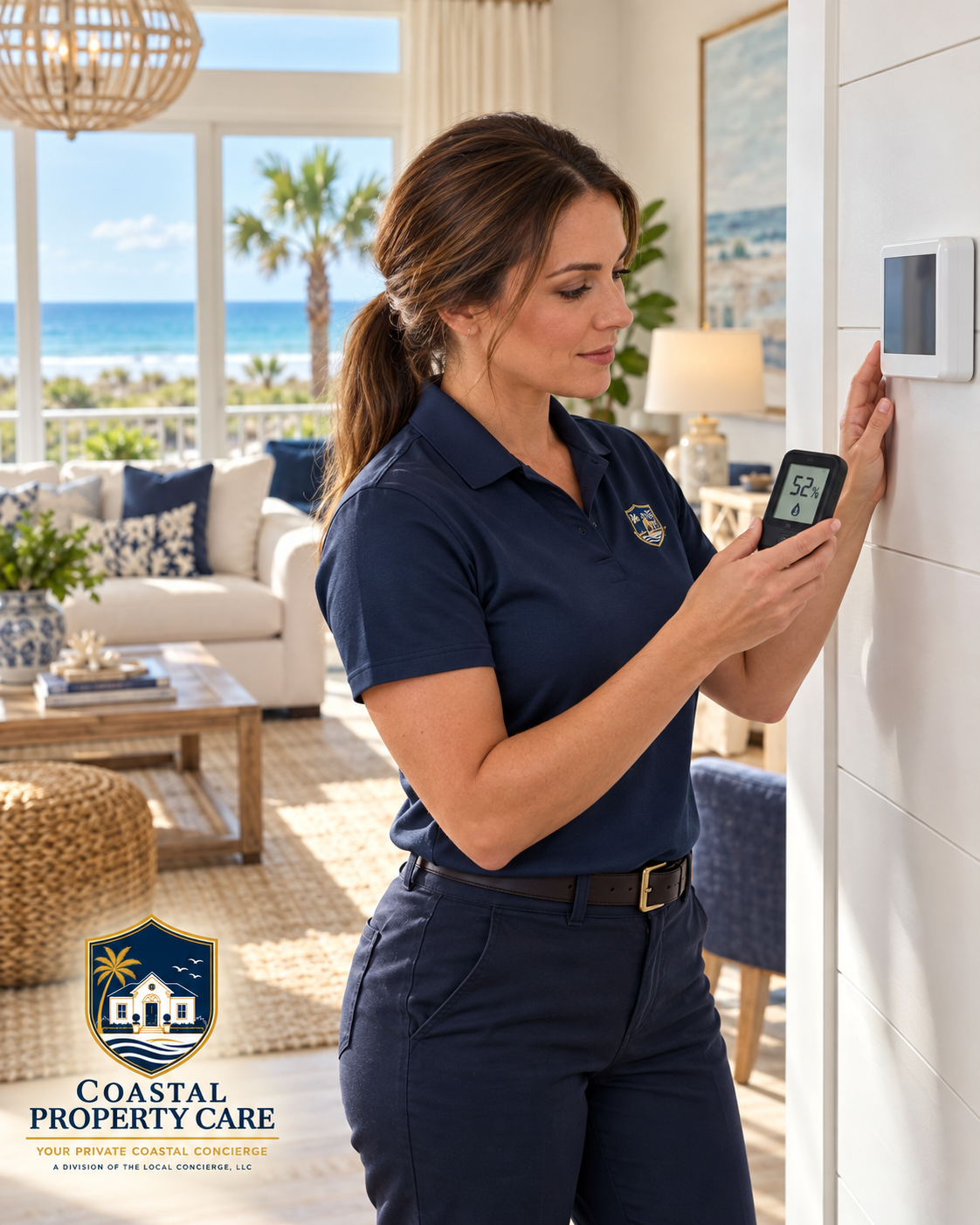
A thermostat setting is useful only if the system remains powered and appears to operate normally. A property-watch visit can document the displayed temperature and humidity, note visible airflow or condensate concerns and compare the current conditions with prior reports.
Depending on the agreed visit route, the check may include:
- Recording displayed temperature and relative humidity
- Confirming that the thermostat remains in the authorized mode
- Observing accessible supply registers for normal airflow
- Looking at the accessible drain pan or surrounding area for visible water
- Checking closets, cabinets and areas under sinks for dampness or odor
- Noting condensation, staining or unusual sounds
- Sending photographs and a concise report to the owner
Remote alerts help, but they do not see the whole house
A smart thermostat, humidity monitor or leak sensor can provide valuable information between visits. It may also depend on power, internet service, battery life and correct placement. A local visual visit adds context: whether a reading corresponds with visible condensation, standing water, an unusual odor or another condition that should be referred to a qualified professional.
If something is unusual, respond to the condition—not just the number
An unexpected reading may call for a recheck, a review of recent weather or a service appointment. Property care should not attempt to diagnose or repair HVAC, electrical, plumbing, mold or building-envelope concerns unless the work is performed by the appropriately qualified professional.
Coastal Property Care documents agreed visible conditions and communicates concerns so the homeowner can decide what happens next. That creates a practical local presence without overstating what a routine visit can guarantee.
Further reading: U.S. Environmental Protection Agency — A Brief Guide to Mold, Moisture and Your Home