
Private coastal property care works best when expectations, authorizations and reporting are tailored to the home. This guide answers a practical question second-home owners regularly face along the Texas Gulf Coast.
Safe Access Comes Before the Visit
A post-weather visit begins only after travel and entry are reasonably safe. Evacuation orders, flooded roads, downed lines, unstable structures, debris and community access restrictions can delay a property check even when the weather has moved away.
The owner update should start with that reality. A responsible care provider confirms when access is possible, does not enter an obviously unsafe area and does not promise an immediate visit while local authorities or property conditions say otherwise.
Photograph the Condition Before Moving Anything
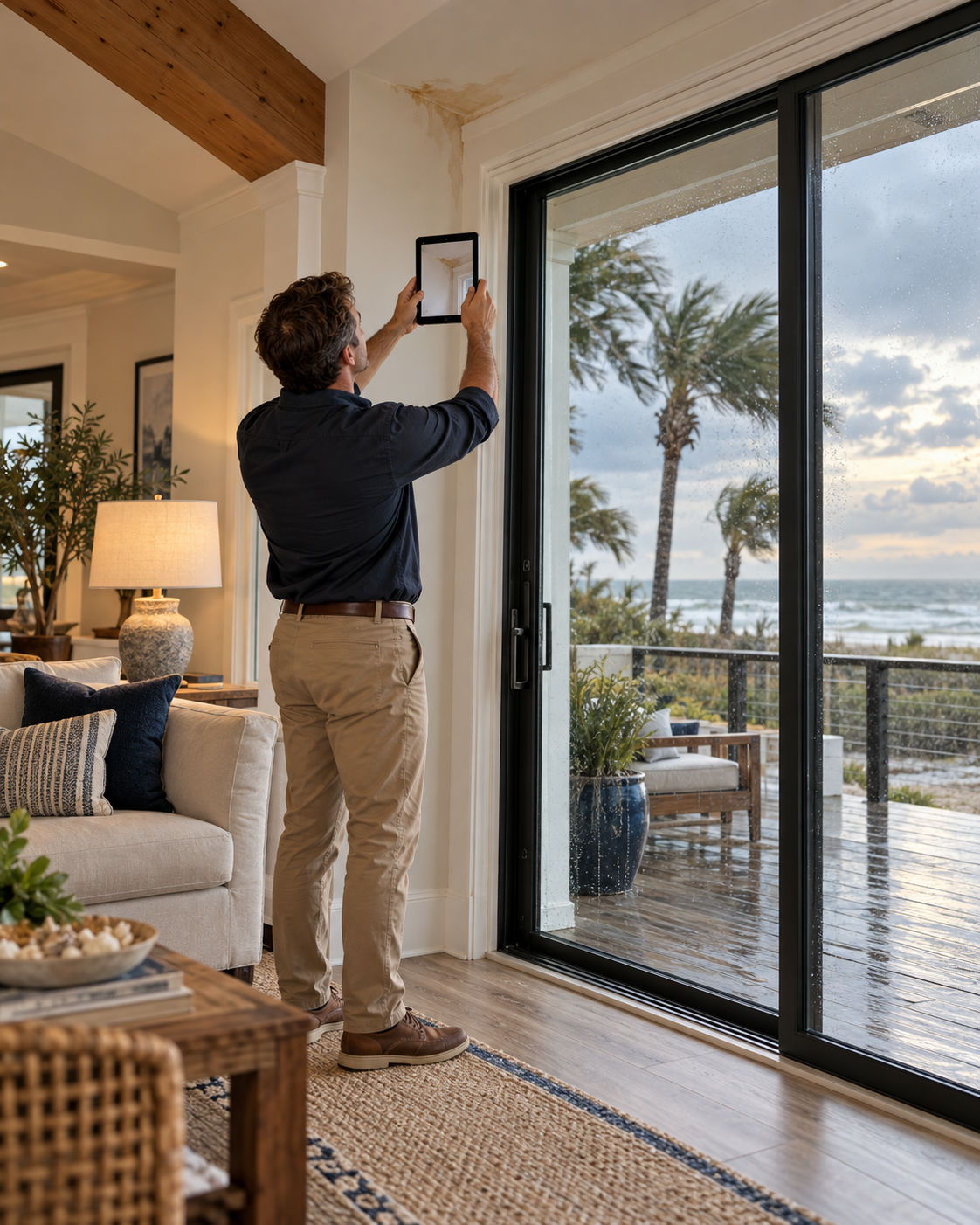
The first useful record is the condition as it was found. Clear overview photographs establish context; closer photographs document a visible stain, shifted object, damaged screen or water line without turning an observation into a diagnosis.
When practical and safe, the sequence should show where the concern sits in relation to the room or exterior elevation. Moving furniture, drying a surface or arranging a repair before documenting the original condition can make the owner’s review more difficult.
- Take an exterior overview from safe, accessible areas
- Photograph doors, windows, sliders and visible openings included in the care plan
- Capture the room or area before taking close detail photographs
- Record visible water, staining, displaced items or debris without speculation
- Note the visit time, access limits and areas that could not be observed
Follow the Same Property-Specific Route
A post-storm walk is more useful when it follows the home’s established property-watch route. Prior photographs and visit notes provide a point of comparison and help distinguish a new visible change from a known condition.
The route may include the roofline only from accessible ground-level viewpoints, exterior finishes, fences, windows and sliders, then agreed interior rooms, ceilings, walls near openings, floors, accessible plumbing areas, thermostat and humidity displays. The visit remains visual and non-invasive; the care provider should not climb onto a roof, open electrical equipment or enter a hazardous space.
Photos First. Then a Clear Call
The owner should receive a concise summary that separates what was observed from what still needs professional evaluation. Calm communication is more useful than a stream of unlabeled images or a confident conclusion outside the provider’s expertise.
The first call or written update should identify whether an urgent safety concern is visible, which areas were checked, what could not be accessed and whether the owner should authorize a qualified roofer, HVAC technician, plumber, electrician, restoration company or other specialist.
- What was visible at the time of the visit
- What appeared unchanged compared with the prior documented condition
- What could not be safely or reasonably observed
- Which concern needs owner attention now
- Which next step requires a qualified or licensed professional
Vendor Coordination Requires Owner Direction
If a trade is needed, Coastal Property Care can help coordinate approved access and communicate the visible concern within the owner’s authorization. The service does not choose an open-ended scope, approve major repairs or represent an insurer unless those responsibilities are separately and expressly documented.
Before storm season, owners should confirm emergency contacts, decision-makers, spending limits, preferred providers and the secure access process. Those details reduce delays when the owner is away and the property needs a specialized evaluation.
A Post-Weather Visit Is Not an Inspection or Guarantee
A visual property-care visit cannot verify concealed moisture, structural integrity, roof condition, electrical safety, mold, indoor air quality or the full performance of building systems. It also cannot guarantee that conditions will not change after the visit.
Its value is practical and defined: a local set of eyes, a consistent route, clear photographs and prompt communication so the owner can decide what should happen next.
Frequently Asked Questions
How soon after a storm will the property be checked?
Timing depends on safe travel, local restrictions, community access, staffing and the conditions at the property. Safety takes priority over speed.
Will the visit include getting onto the roof?
No. A standard post-weather property-care visit uses safe, accessible viewpoints. Roof evaluation belongs to a qualified roofing or inspection professional.
Can photographs prove that there is no storm damage?
No. Photographs document visible conditions in the areas observed; they cannot rule out concealed or inaccessible damage.
What happens if water or damage is visible?
The owner receives photographs and a clear summary. Emergency services or qualified trades may be recommended, and approved vendor access can be coordinated within the written authorization.
Is the report an insurance inspection?
No. It is a limited property-care observation and communication record, not an adjuster, engineering, environmental or professional home-inspection report.